
September Net
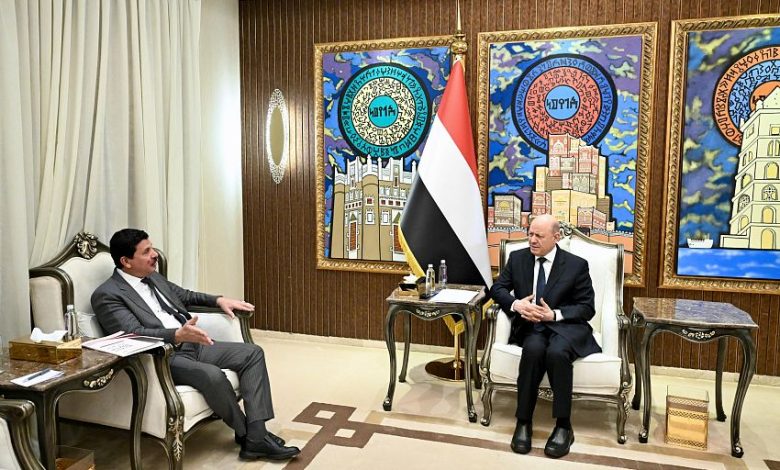
His Excellency President Dr. Rashad al-Alimi, Chairman of the Presidential Leadership Council (PLC) received today, Wednesday, the National Committee to Investigate Allegations of Human Rights Violations (NCIAHRV), headed by Judge Ahmed al-Maflahi, who handed him a copy of the committee’s 14th report.
Al-Maflahi briefed al-Alimi on the committee’s actions over the past period, including document the violations of human rights, investigate the incidents of violations and refer the case to the judiciary, as well as field visits to the prisons, detention centers and sites where victims suffered the violations.
The briefing included the main findings of the committee’s 14th periodic report, which documented 2,062 violations affecting 2,932 victims across various governorates, including 501 incidents of killing and injuring civilians, resulting in the death of 193 civilians and injury to 388 others.
The investigation results showed that Houthi militias were responsible for 446 incidents of killing and injuring civilians, as well as 56 out of 57 cases of child recruitment documented by the committee during the period covered by the report.
The report documented 534 cases of arbitrary arrest and enforced disappearance, 371 of which were attributed to Houthi militias, along with dozens of incidents involving extrajudicial killings, torture and ill-treatment, forced displacement, house demolitions, landmine planting, and attacks on civil, religious and medical facilities, as well as violations related to women and attacks on commercial ships in the Red Sea.
The President praised the national and professional role played by the NCIAHRV, particularly during this exceptional period. He remarked that the committee’s independence, neutrality and professionalism are the source of its strength and credibility before Yemenis and the international community.
The President stated that the ongoing developments require the committee to intensify quick field monitoring and investigation of incidents related to the escalation, especially in Taiz, Hodeida, Marib and areas affected by hostile operations.
He said “We want there to be a nationally documented human rights picture of what happened, including the killing and starving of civilians, displacement and forced migration, targeting of homes and civil, medical and educational facilities, damage to IDP camps, landmines, and any other violations of international humanitarian law or international human rights law.”
The Chairman of the LOC stressed that the state is committed to fighting its battle while sticking to the law and investigating human rights violations, no matter who is responsible.
He remarked that the war ignited by terrorist militias is not an excuse to suspend the law, and the wider the attacks get, the greater the state’s responsibility to protect civilians and respect international humanitarian law.
The President added” Our battle to restore the state institutions is, at its core, a fight to restore the law and protect human rights, because the state that Yemenis are struggling to restore should be the first to abide by the law”.